
- July 22, 2026
- admin
- 0 Comments
- 63 Views
- 0 Likes
- Biochar
What Is Biochar Soil Health Guide
What Is Biochar? A Practical Guide to How It Improves Soil Health
How Biochar Is Made
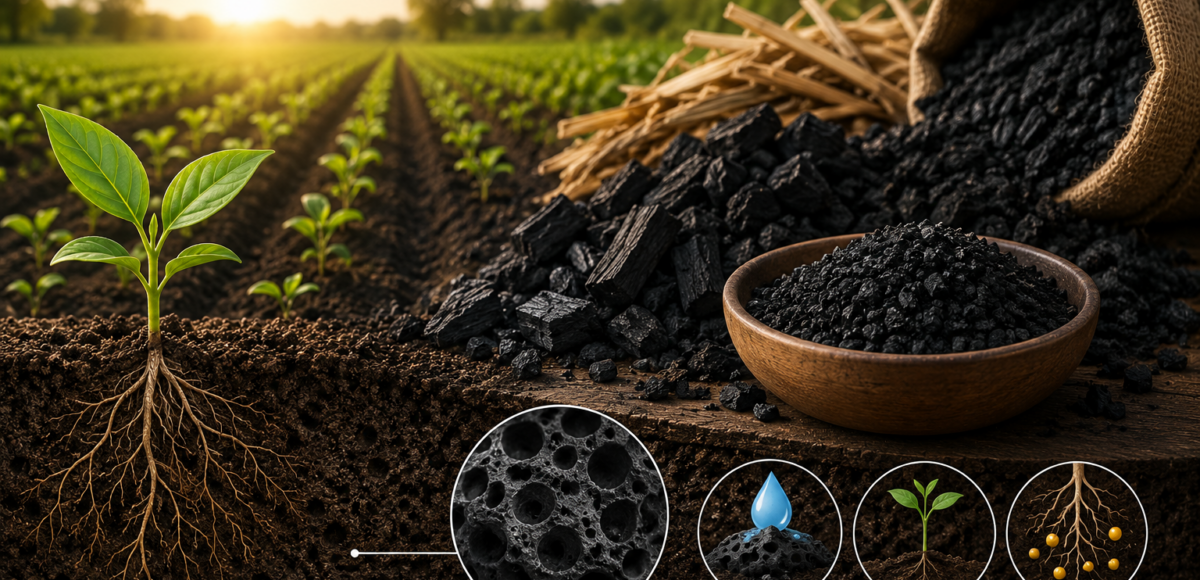
Raw biochar straight out of this process is useful, but limited. Activation opens up its internal pore structure so it can hold far more water and nutrients. Inoculation goes a step further, loading that pore structure with beneficial microorganisms before the biochar ever reaches a field. Activated, inoculated biochar behaves very differently in soil than plain biochar does.
What Makes Biochar Different From Compost or Manure

It Doesn't Break Down Quickly

It Physically Changes Soil Structure
Key Benefits of Biochar for Soil Health
- Increases water-holding capacity, so soil stays moist longer between irrigations
- Improves soil aeration and porosity, supporting stronger root growth
- Provides a stable habitat for beneficial soil microbes
- Holds nutrients near the root zone, reducing leaching and nutrient waste
- Adds long-term organic carbon to soil that doesn’t disappear in one season
- Can help buffer soil pH swings, especially under temperature stress
How to Use Biochar on Your Farm
- Choose activated, inoculated biochar rather than raw biochar for faster, more reliable results.
- Apply it uniformly to the soil surface — commonly in the 75–200 kg per acre range for a biochar-based soil conditioner, adjusted for existing soil condition.
- Mix it into the top layer of soil rather than leaving it on the surface.
- Irrigate the field after application.
- Combine with farmyard manure or compost for compounding benefits.
- Reapply regularly — biochar’s benefits build across multiple seasons rather than peaking in one.
A Real-World Example: Engineering Meets Agriculture
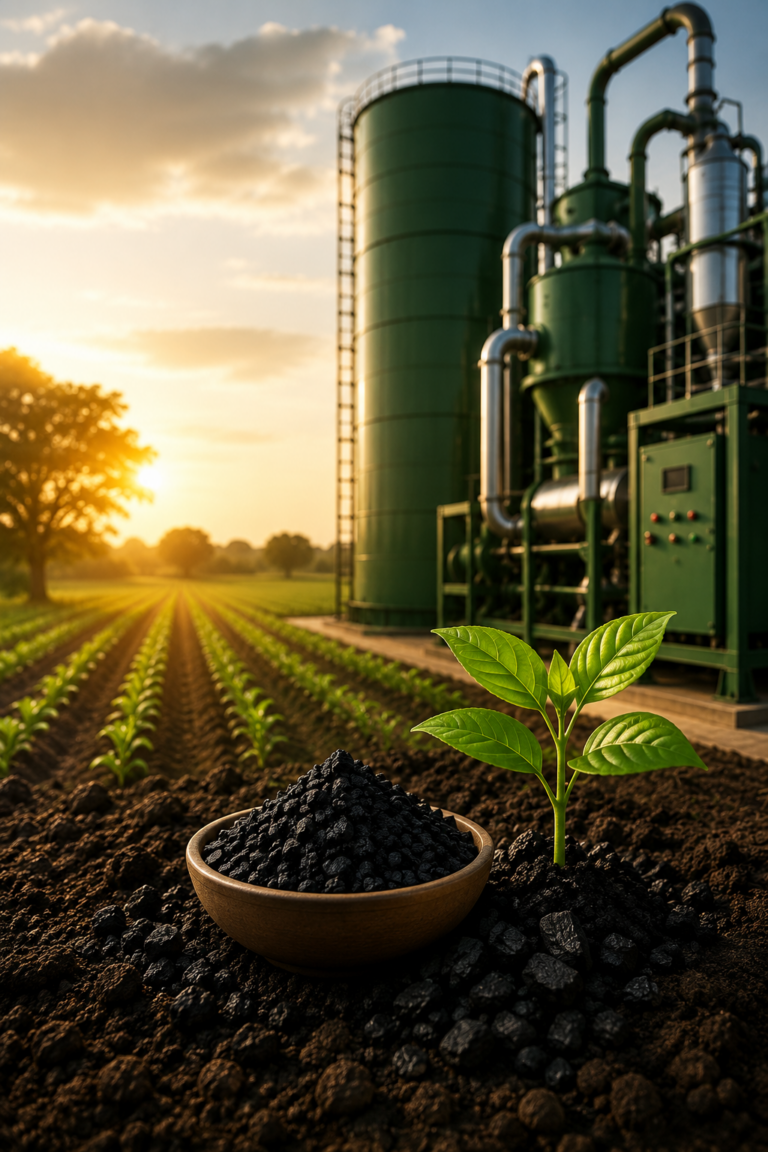
That same engineering approach — controlled pyrolysis, activation, and microbial inoculation — is what goes into Dharni Navjeevan Soil Regenerator, an activated biochar soil conditioner built for Indian farm conditions.
Conclusion: What Is Biochar Worth to Your Farm?
What is biochar made from?
Biochar is made from agricultural biomass — crop residue, wood waste, or other organic matter — converted into a stable carbon material through controlled heating without oxygen (pyrolysis).
How long does biochar last in soil once applied?
Biochar is far more stable than compost or manure and can continue functioning in soil for years rather than breaking down in a single season.
Is biochar the same as charcoal?
They’re produced in a similar way, but biochar is made specifically for soil use and, when activated and inoculated, carries beneficial microorganisms that ordinary charcoal does not.
Can biochar be used with chemical Products?
Yes. But Not Advised – We Should Use it Alone for Most Optimal Result.
How much biochar should I apply per acre?
For an activated, inoculated biochar soil conditioner, 75–200 kg per acre is a common recommended range, depending on existing soil condition.
See how Dharni Navjeevan Soil Regenerator applies this technology on Indian farms — visit the Product page.