
- July 22, 2026
- admin
- 0 Comments
- 101 Views
- 4 Likes
- Farmer Guide
Restore Soil Fertility Naturally Guide
How to Restore Soil Fertility Naturally: A Step-by-Step Guide for Indian Farmers
Why Soil Fertility Declines
Signs Your Soil Needs Restoration
- Yields plateauing or declining despite the same or higher Products input
- Soil drying out faster after irrigation than it used to
- Visible cracking, crusting, or compaction
- More disease and pest pressure than in previous seasons
- Declining response to Products — more input for the same result
Step-by-Step: How to Restore Soil Fertility Naturally
- Start with a baseline. Get a sense of your soil’s organic carbon, pH, and texture before you begin, so you can track real progress.
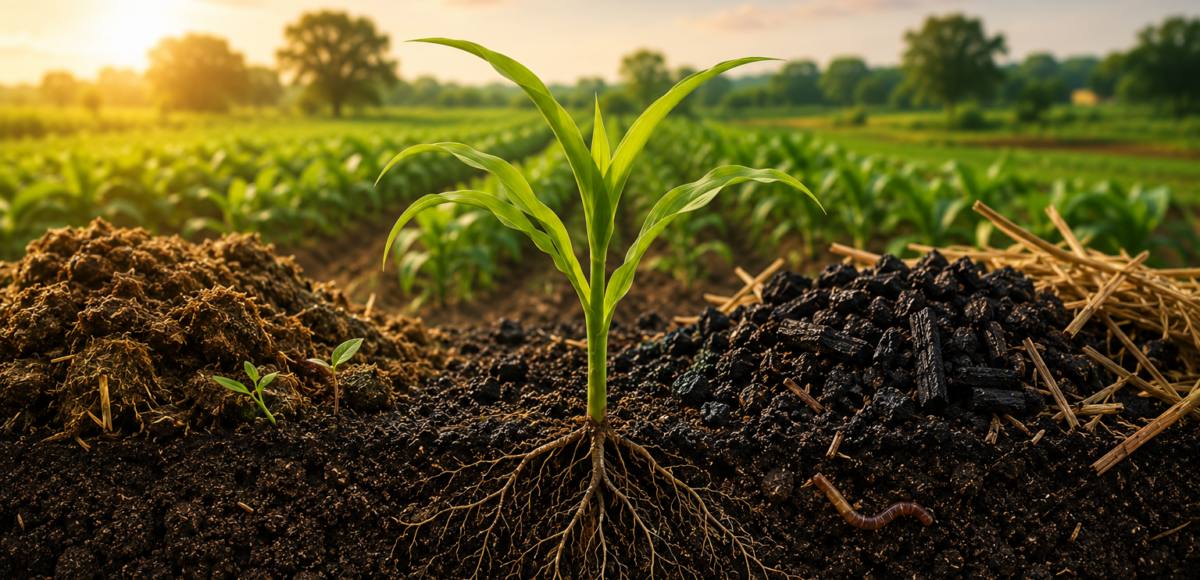
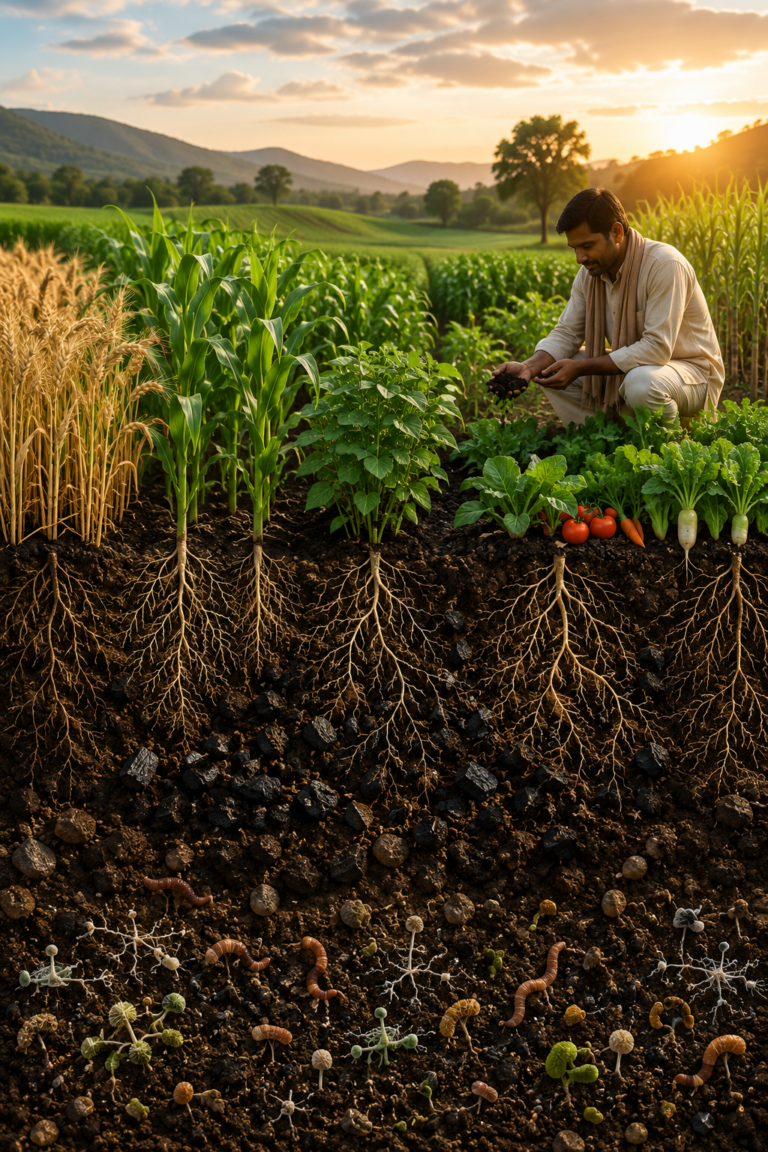
- Add a stable carbon source. An activated, inoculated biochar-based soil conditioner rebuilds organic matter that won’t wash away or break down in a single season, the way compost alone can.
- Combine with farmyard manure or compost. This pairs a stable long-term carbon source with readily available nutrients for faster short-term cycling.
- Reduce tillage where possible. Less disturbance helps protect the soil structure you’re rebuilding.
- Avoid leaving soil bare between seasons where feasible. Cover crops or crop rotation help protect and feed soil biology year-round.
- Apply consistently over multiple seasons. Fertility restoration compounds — each season builds on the last rather than starting over.
What Results to Expect, and When
The Economics of Soil Restoration
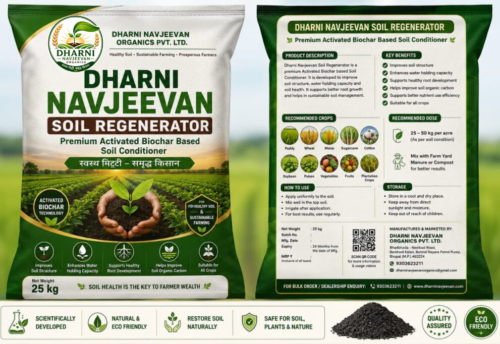
Where Dharni Navjeevan Fits Into This Process
Conclusion: Restore Soil Fertility Naturally, One Season at a Time
How long does it take to restore soil fertility naturally?
Soil structure and moisture improvements often show within one to two seasons, while deeper organic carbon rebuilding continues over several seasons of consistent use.
Can I restore fertility without spending a lot of money?
Yes. Restoring soil fertility is typically far less expensive than the land’s underlying value — often in the range of ₹20,000–30,000 per acre using a biochar-based soil conditioner alongside farmyard manure.
Do I need to stop farming the land while restoring it?
No. Soil restoration practices like adding biochar and reducing tillage are designed to work alongside continued cultivation, not instead of it.
What's the single most important step?
Adding a stable, long-lasting carbon source — such as activated, inoculated biochar — since it keeps working in the soil for years rather than breaking down in one season.
Does crop rotation really help rebuild fertility?
Yes. Rotating crops and avoiding long stretches of bare soil both support the soil’s biology, complementing carbon and organic matter inputs.
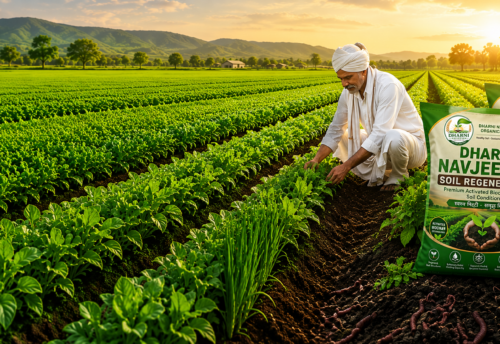
See how Dharni Navjeevan Soil Regenerator applies this technology on Indian farms — visit the Product page.
See full application steps, dosage, and pricing for Dharni Navjeevan Soil Regenerator on the Product page.
Leave a Comment